
READING TIME 2 MINUTES
UPDATED AS OF October 1, 2026
Start With Where the Money Goes
Service charges are one of those costs that can feel fairly minor when buying a property. A few years into ownership, especially when the bill keeps creeping up, they become much harder to ignore.
And an increase doesn’t automatically mean something is wrong.
A property or community with pools, landscaped areas, security, gyms, clubhouses and extensive shared facilities will naturally cost more to maintain than one with fewer amenities.
The better question is, does the amount you’re paying make sense for what you’re actually getting?
Comparing the Number Alone Doesn’t Tell You Much
Looking at the service charges of a neighbouring property might seem like the obvious benchmark, but it can be misleading.
Two properties in the same area can have completely different facilities, maintenance requirements, staffing levels and ages. A more useful comparison is with properties of a similar age, specification and amenity level.
That gives owners a much clearer picture of whether their property is genuinely expensive to maintain or simply costs more because it offers more.
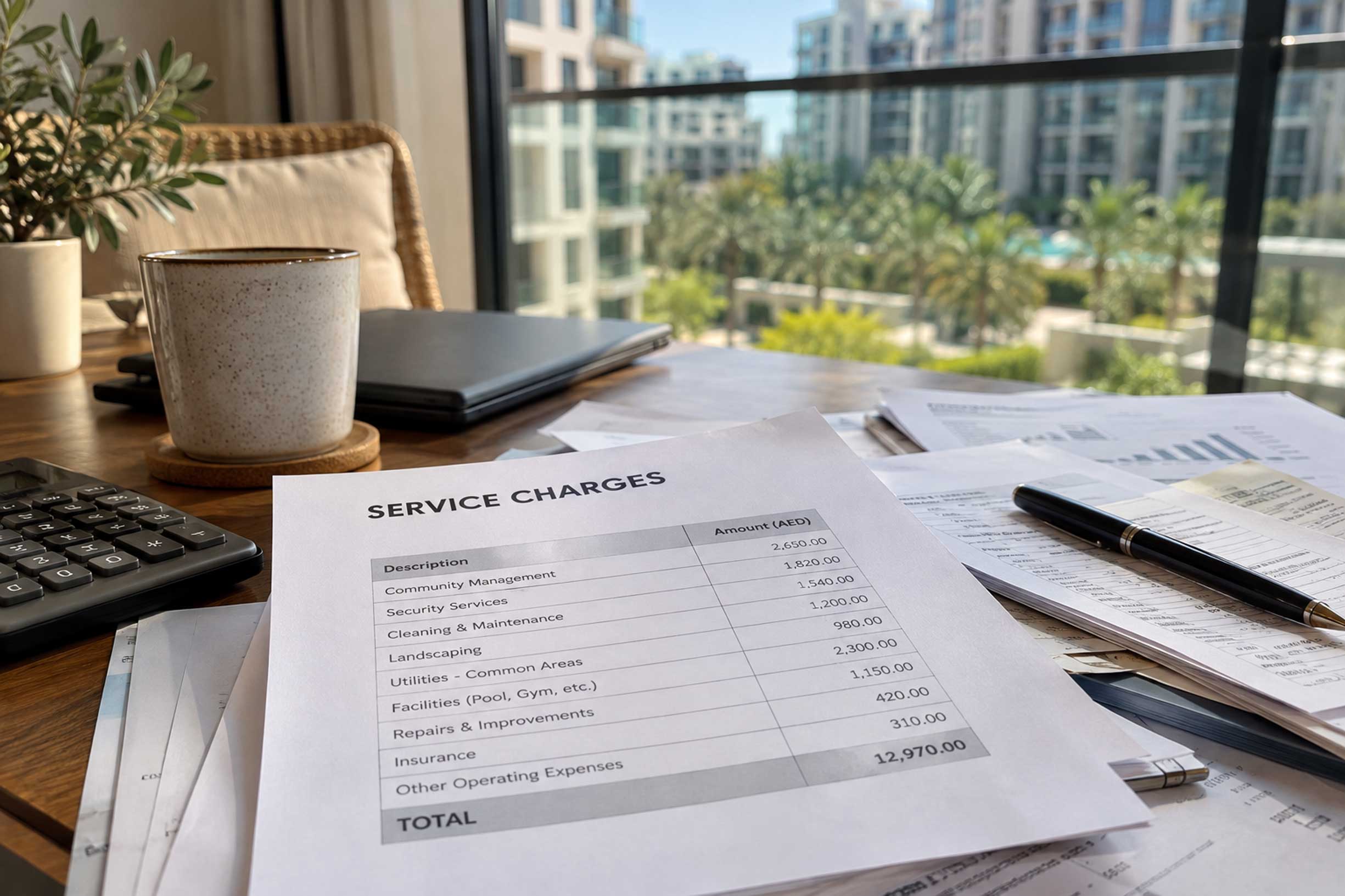
Start With the Budget, Not the Invoice
Property owners should understand where their money is actually going.
The annual budget should give a breakdown of how service charge funds are being allocated across maintenance, security, cleaning, landscaping and shared facilities.
This matters beyond the yearly bill too. Buyers often spend weeks comparing purchase prices and price per square foot but give far less attention to recurring ownership costs.
Over several years, service charges can make a meaningful difference to the actual cost of owning a property — and potentially how attractive it is when it comes time to sell
What If the Property Is Still Going Through Registration?
This is where things can become more complicated.
Some owners may receive service charge invoices while a development or community is still completing the relevant regulatory procedures. In that situation, it becomes important to understand how the charges were calculated, whether the required approvals are in place and how the collected funds are being managed.
The exact regulatory process can differ across the UAE, so owners should check the rules and relevant property authority for the emirate where their property is located.
Where Is the Money Actually Going?
This is perhaps the most important question.
Owners should be able to understand what their service charges are funding and whether that spending is reflected in the condition of the property and community.
If charges continue rising while landscaping, security, cleaning, maintenance or shared facilities appear to be declining, asking for a clearer breakdown of expenditure is entirely reasonable.
A Few Questions Worth Asking
Ask for the current service charge budget, how the rate was calculated, which approvals apply, what the major operating expenses are and whether previous spending can be compared with the amounts collected.
For properties still completing regulatory procedures, owners can also ask when the process is expected to be finalised and how interim payments will ultimately be accounted for.
Service Charges Should Make Sense on the Ground
Higher service charges aren’t necessarily bad service charges.
If a property or community offers extensive amenities, maintains them properly and provides owners with reasonable transparency over spending, a higher annual bill may be perfectly understandable.